Hacking Cancer with the Human-Centered Data Science Group
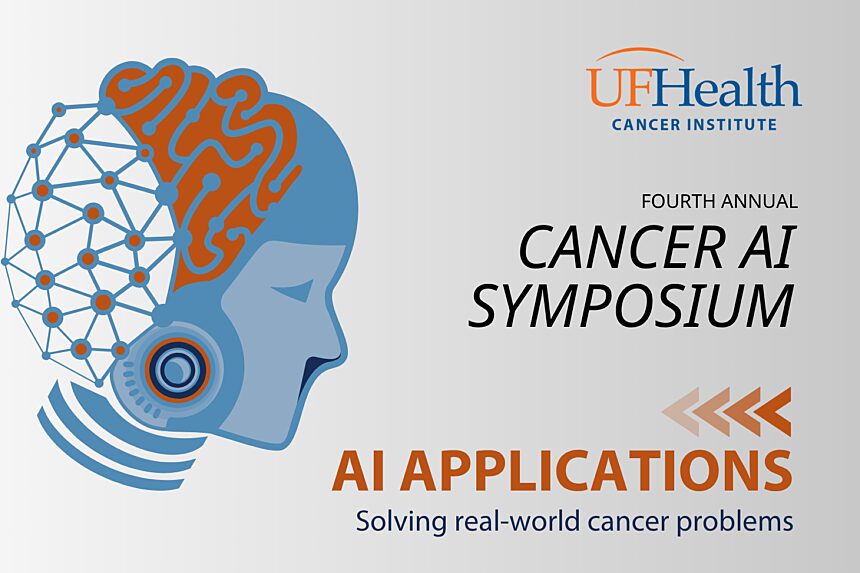
Thirteen students formed three teams, picked a cancer-related AI challenge, and had one weekend to build a working prototype. The event brought together students from different backgrounds and paired them with faculty who span databases, machine learning, bioinformatics, and spatial-temporal data science. The results were presented on November 5th, 2025 at the UF Health Cancer Center AI Symposium.
How it worked
The UF Health Cancer Center AI Working Group and the Human-Centered Data Science (HCDS) group co-organized the event. On Friday, October 24th, teams met for a kickoff session, chose their project, and got to work. They had until midnight on Sunday, October 26th to submit. Teams of two or more could use external data and extend existing models.
The final presentations took place on November 5th as part of the broader AI Symposium, which included keynote speakers, lightning talks, a poster session, and an awards ceremony.
The challenges
Each project targeted a different facet of cancer research, from pathology image classification to patient nutrition to metabolomics.
Predicting breast cancer histopathology (3 students)
Distinguishing between atypical ductal hyperplasia (ADH) and low-grade ductal carcinoma in situ (DCIS) in histopathology slides is difficult even for trained pathologists. This team built a classification model using the BRACS dataset, which contains 547 labeled whole slide images and 4,539 labeled regions of interest from 189 patients.
Cancer patient diet cookbook (6 students)
Cancer patients often face strict dietary restrictions that vary by treatment, condition, and personal circumstance. This team built a system that takes a patient's dietary constraints and generates a recipe book tailored to different cuisines, skill levels, and budgets. Each recipe includes calorie counts and macronutrient breakdowns matching a therapeutic diet prescription. The team trained their model on two Kaggle datasets.
Lung cancer metabolomics (4 students)
Metabolomics offers a promising avenue for early cancer detection. This team trained a model on two case studies from the Metabolomics Workbench to distinguish lung cancer patients from healthy controls. A secondary goal was identifying which metabolites serve as biomarkers for lung cancer.
Organizers
Faculty: Daisy Wang, Kiley Graim, Christan Grant, Zhe Jiang
Student chairs: Nathan Gilman, Aashish Dhawan, Ray Chen, Detravious Jamari Brinkley
Looking ahead
We plan to run this hackathon yearly. If you are interested in participating or organizing, reach out to the HCDS chairs. HCDS seminars run every other Friday at 2 PM in Malachowsky Hall.