Speech, Research, and the Pacific: Presenting at ASRU
From Code to Conversation: My Time at the ASRU Workshop in Honolulu
When people think about speech technology research, they often imagine lines of code, models training overnight, and evaluation metrics filling spreadsheets. But every once in a while, that work leaves the screen and enters a room full of people who care about the same questions you do.
For me, that moment happened at the Automatic Speech Recognition and Understanding (ASRU) Workshop in Honolulu, Hawaii. And somehow, my research journey took me from hours of debugging models to discussing child speech understanding with researchers overlooking the Pacific Ocean.
Arriving in Honolulu
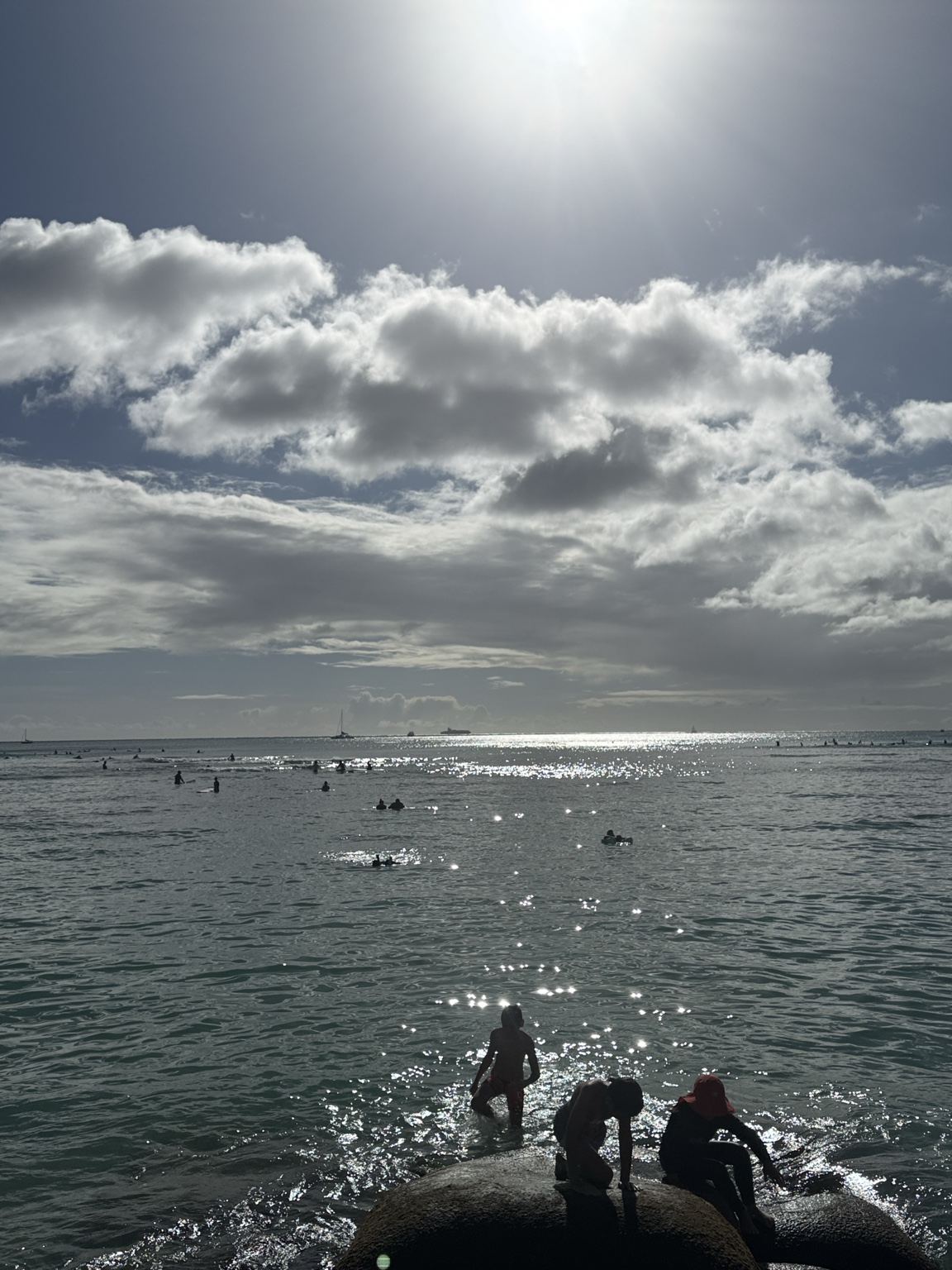
There is something surreal about flying across the world to talk about speech recognition. Honolulu greeted me with warm air, ocean breeze, and the quiet excitement that comes with a gathering of researchers who spend their days trying to make machines understand human voices.
The air felt different — warm, soft, and filled with the sound of waves meeting the shore. Palm trees lined the streets, and the Pacific stretched endlessly beyond the beach. For a moment, it was hard to believe that I had traveled thousands of miles for a speech research workshop. But that is the strange beauty of academia: sometimes your research takes you somewhere extraordinary.
The Automatic Speech Recognition and Understanding (ASRU) Workshop is one of those conferences where the conversations are just as important as the talks. You meet people whose papers you have cited, whose models you have benchmarked against, and whose work shaped the field you are now contributing to. And suddenly they are right there in front of you—coffee in hand—asking about your work.
The View From Honolulu
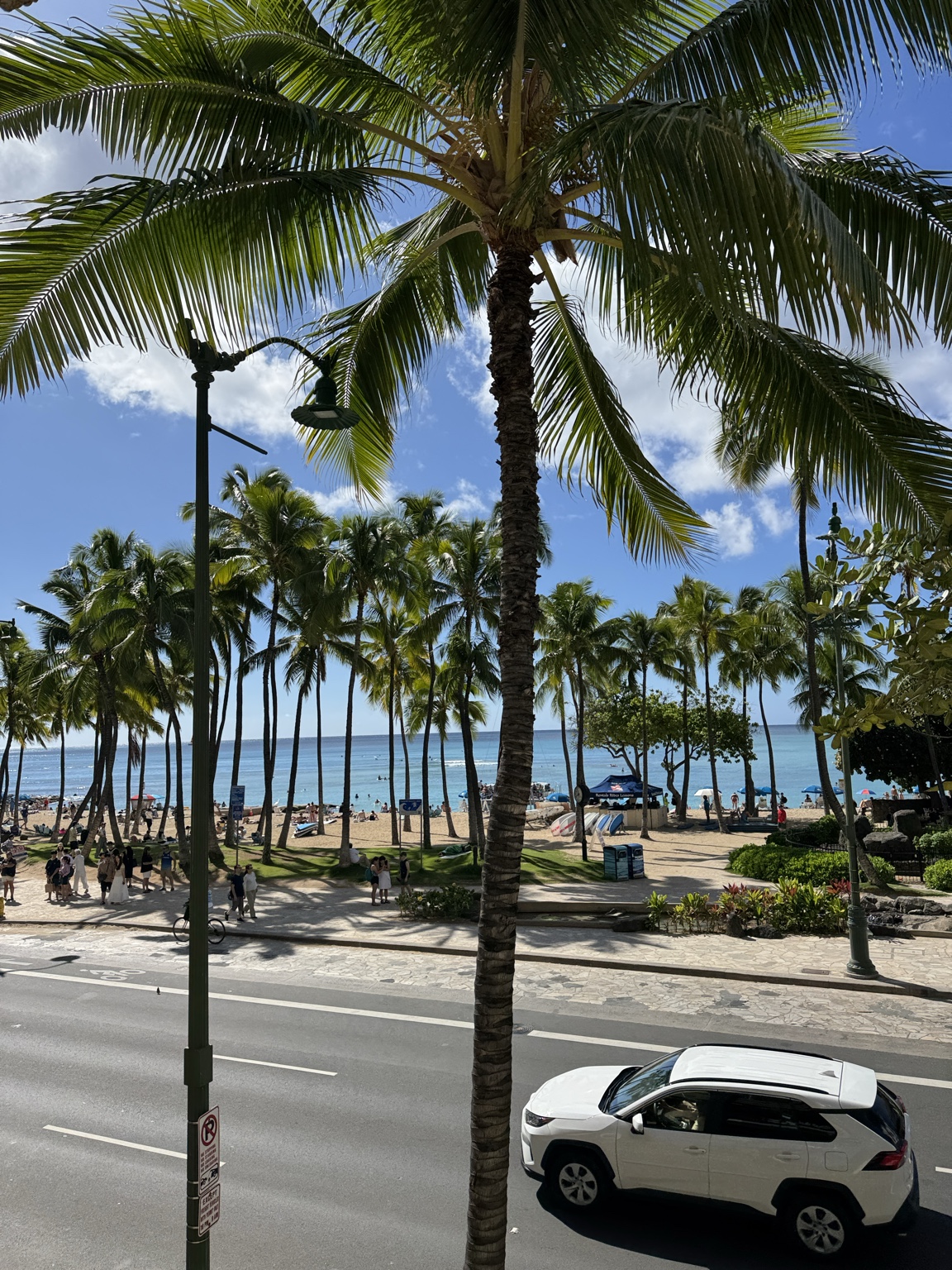
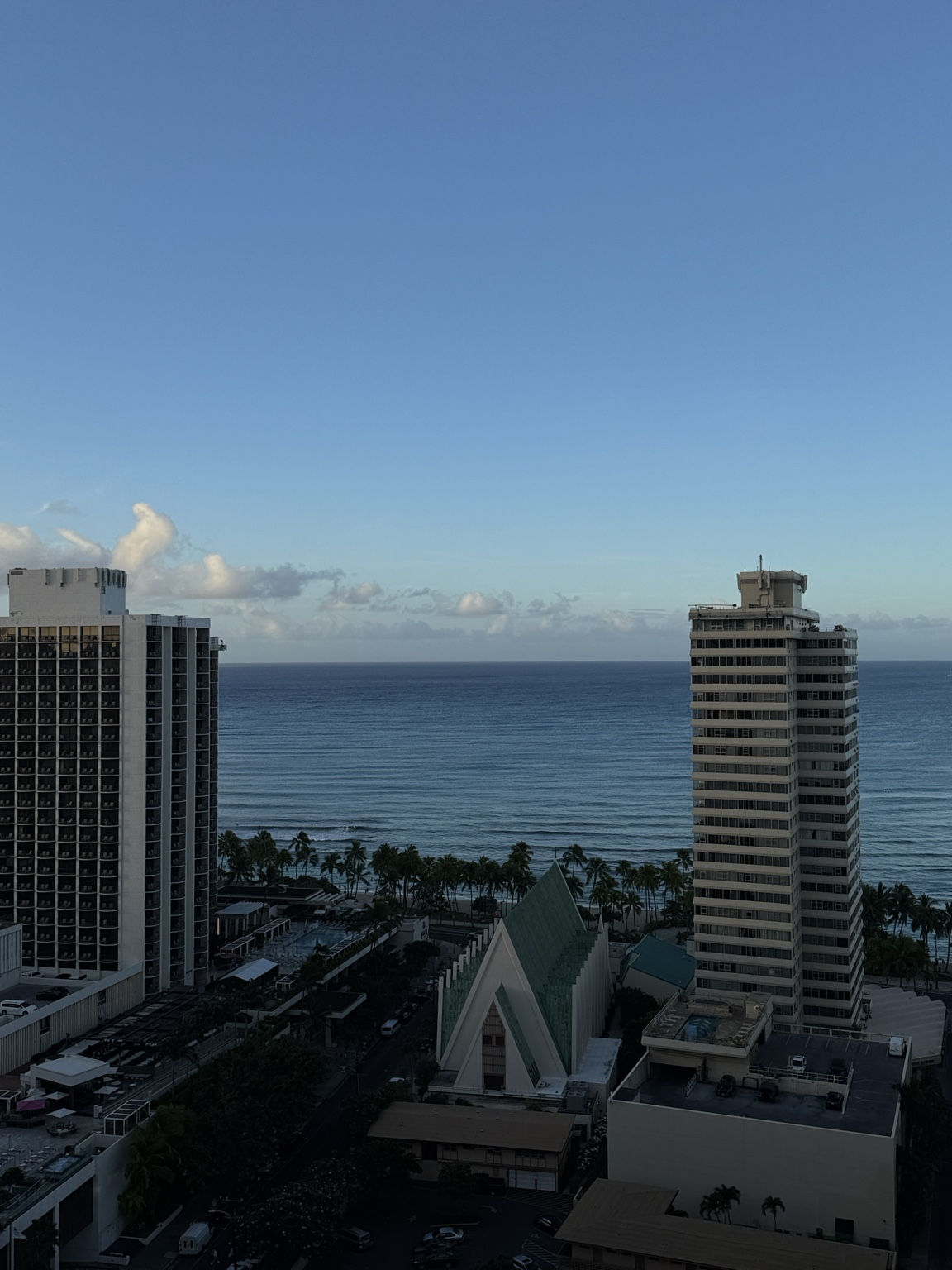
From my hotel window, Honolulu looked like a city balanced between ocean and mountains. Tall buildings stood against a backdrop of lush green ridges, while the clouds moved slowly over the island as if the entire city was breathing. It was the kind of view that makes you pause for a moment before opening your laptop.
Why I Was There
The reason for the trip was the ASRU Workshop — the Automatic Speech Recognition and Understanding Workshop — one of the key gatherings in the speech technology research community.
Researchers from universities and industry labs around the world came together to discuss the future of speech AI:
- speech recognition
- audio-language models
- multilingual speech
- speech accessibility
- and real-world speech challenges
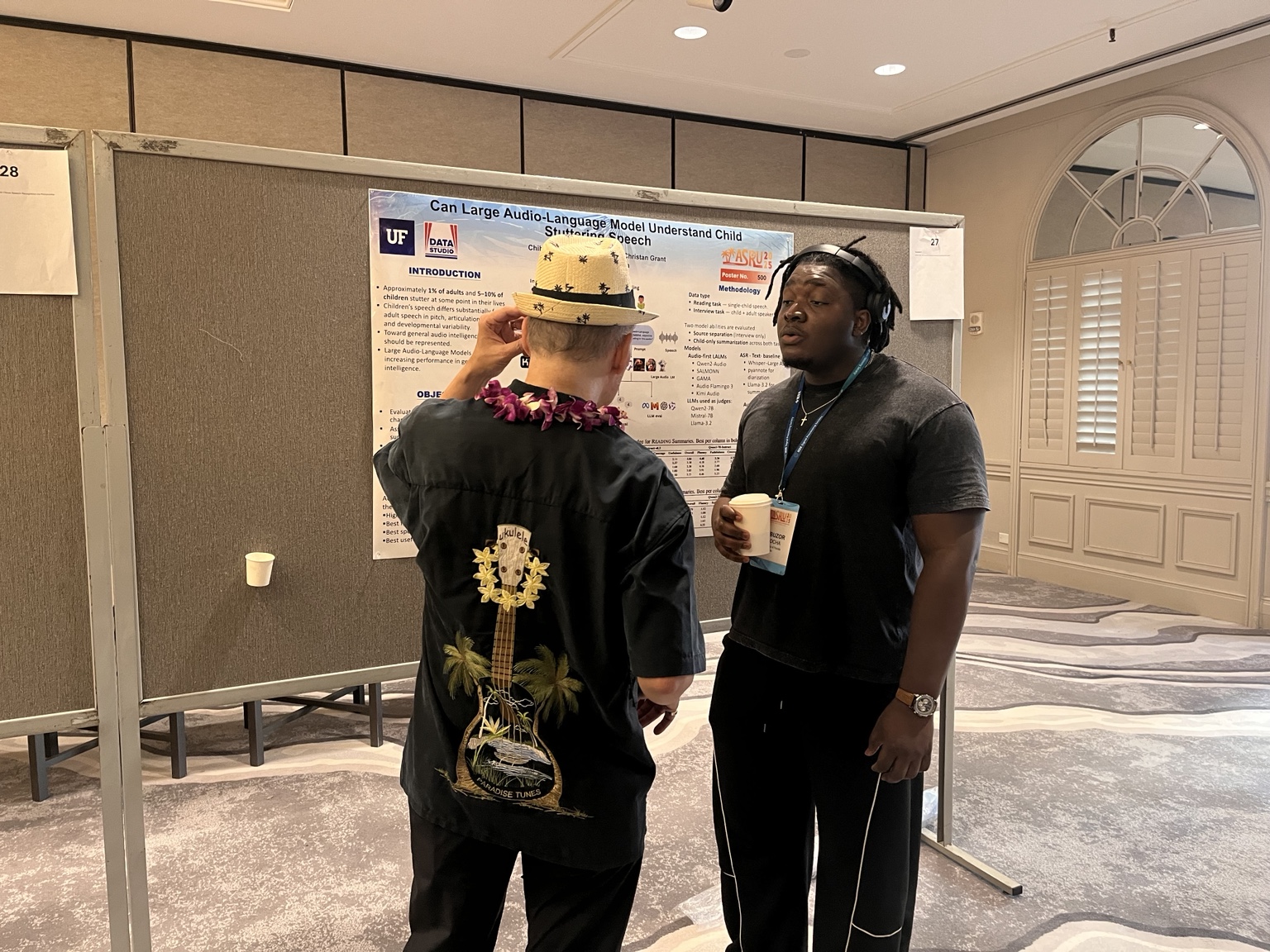
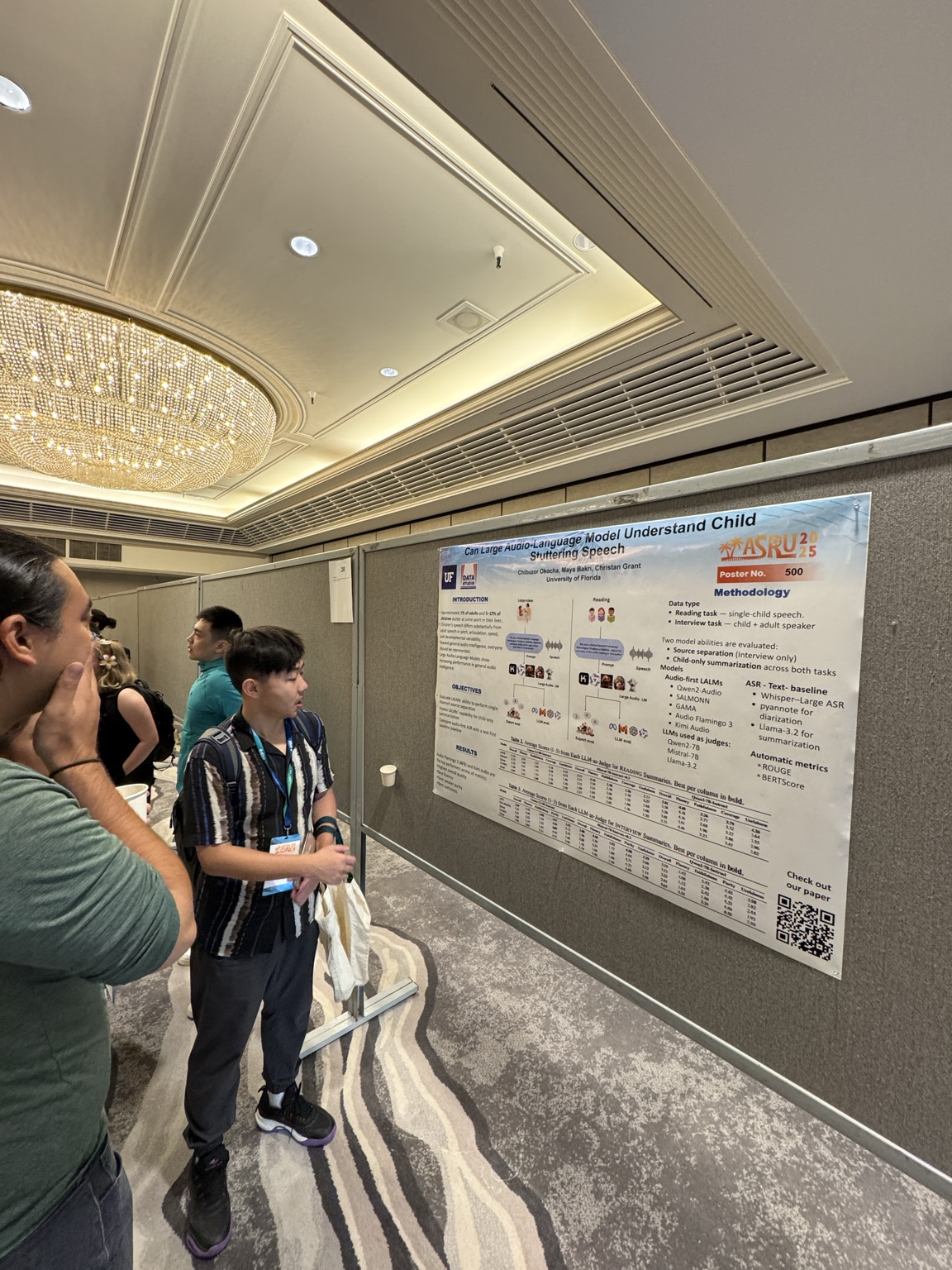
I was there to present my research poster titled:
“Can Large Audio-Language Models Understand Child Stuttering Speech?”
Presenting My Poster
Poster sessions are one of my favorite parts of conferences.
Instead of a formal presentation, you stand beside your work and talk to anyone who is curious enough to stop.
Each conversation is different.
Some people ask about methodology.
Others ask about datasets.
Some want to discuss applications.
And occasionally, someone asks a question that changes the way you think about your entire project.
Standing beside my poster, I had the chance to talk about the challenges of child speech recognition, especially when speech includes stuttering or disfluencies.
Most speech systems today are trained on adult speech and perform poorly when faced with the natural variability of children's voices.
If speech technology is going to be truly inclusive, we need systems that work for everyone, including children and people with speech disorders.
Those conversations made the research feel alive.
The Energy of the Speech Community
What makes workshops like ASRU special is the people.
You meet researchers whose papers you have cited dozens of times.
You meet students working on problems similar to yours.
You meet engineers building the next generation of speech systems.
And suddenly the research field becomes less abstract and more like a community of curious minds trying to solve hard problems together.
The hallway conversations were just as valuable as the talks.
Sometimes the best ideas happen while standing beside a coffee table with someone sketching a model architecture on a napkin.
Mentorship and Meaningful Conversations
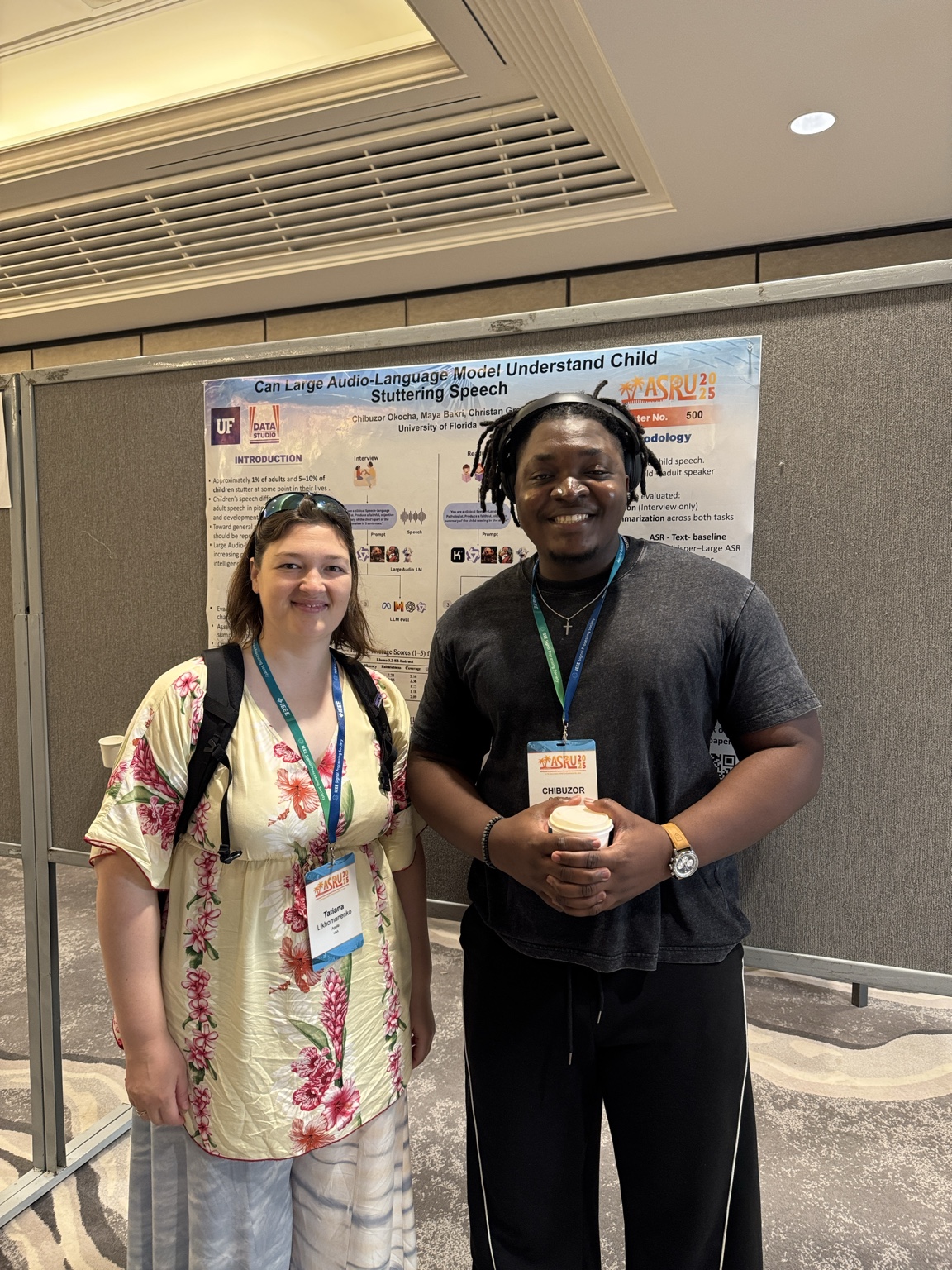
One of the most meaningful parts of the workshop was spending time with my mentor Tatiana from Apple Speech Research.
Mentorship in research is not just about feedback on papers.
It is about perspective.
Conversations about the field, about career paths, about the future of speech technology — those are the moments that stay with you long after the conference ends.
And conferences create space for those conversations in a way that Zoom meetings never quite can.
The Conference Dinner
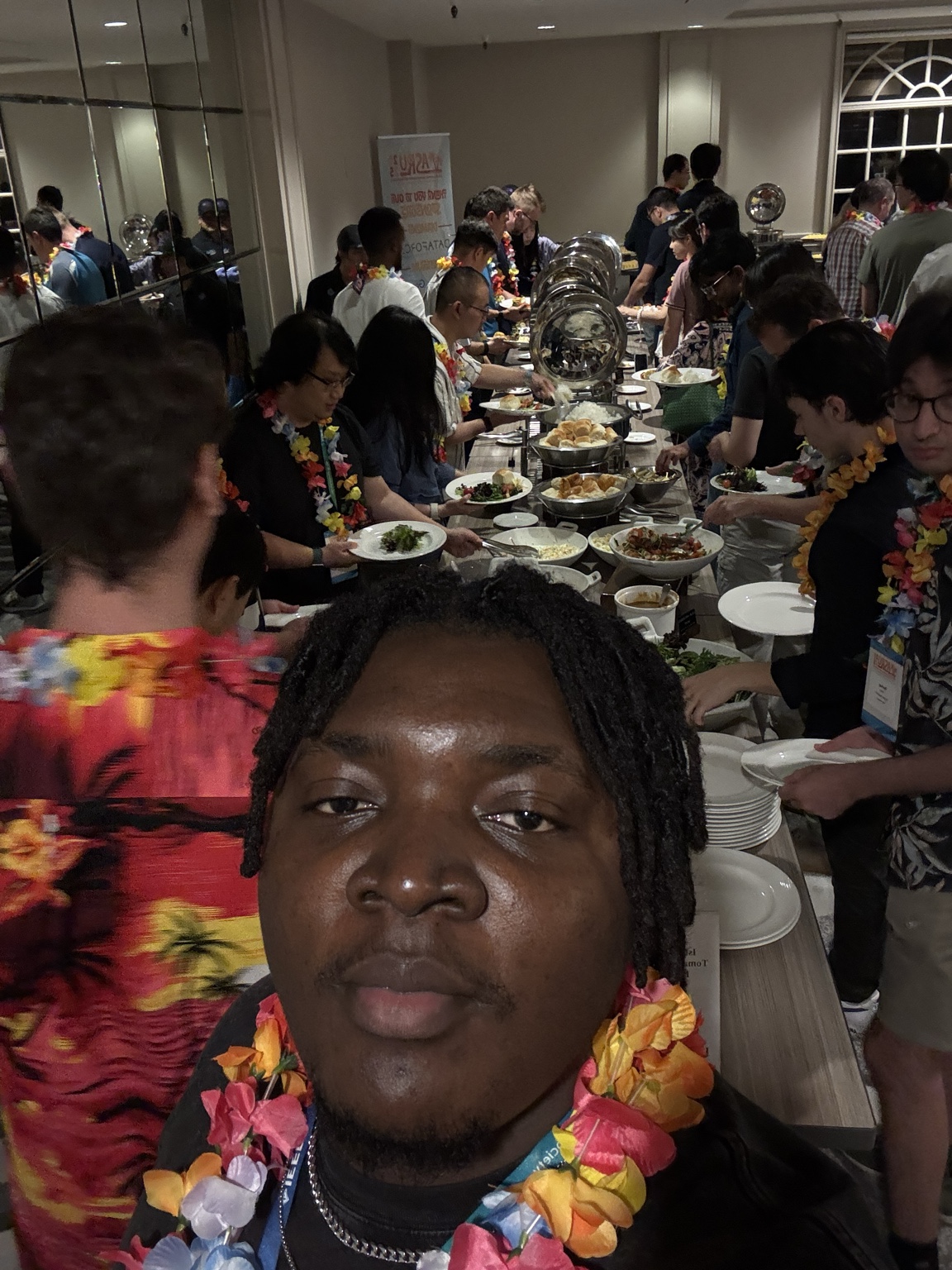
The workshop dinner brought everyone together in a setting that felt both relaxed and celebratory.
Researchers who had spent the day debating model architectures were suddenly sharing stories about their research journeys.
It was a reminder that behind every paper is a long trail of failed experiments, unexpected discoveries, and persistence.
And somehow, all of those stories converged here in Honolulu.
What I Took Away
When I boarded the plane home, I carried more than just conference notes.
I carried new questions:
How can speech systems better understand children?
How can audio-language models adapt to diverse speech patterns?
How do we design speech technology that truly works for everyone?
Conferences do not just showcase research.
They reshape the questions we ask next.
Final Thoughts
ASRU in Honolulu was more than a research workshop.
It was a reminder that behind every dataset and model is something deeply human: our voices.
And the work of teaching machines to understand those voices continues.
But sometimes, that journey includes palm trees, ocean waves, and conversations overlooking the Pacific.